
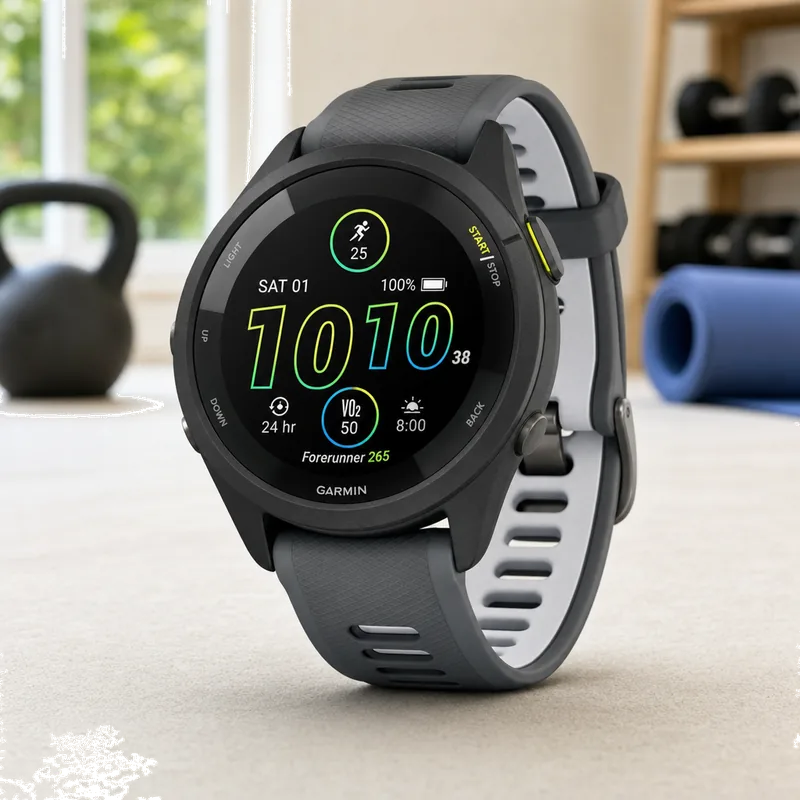
Our Take
The Garmin Forerunner 265 is a dedicated GPS running watch aimed at serious recreational runners and committed amateurs who want training-load data without stepping up to a premium multisport device. It sits comfortably in the mid-to-upper consumer tier, offering a significant upgrade from basic fitness trackers whilst undercutting the pricier Forerunner 955 and Fenix ranges.
Key Features
AMOLED touchscreen display (1.3-inch on the standard model) delivering noticeably sharper, more vibrant visuals than the older MIP screens
Multi-band GPS with support for GPS, GLONASS, and Galileo satellite systems for improved positional accuracy in urban canyons and tree cover
Training Readiness score that factors in sleep, HRV status, recovery time, and training load to guide daily workout decisions
Running Dynamics metrics including ground contact time, vertical oscillation, and stride length (chest strap required for full data)
Up to approximately 15 hours of battery in GPS mode, or around 24 hours with battery-saver GPS settings active
Wrist-based pulse oximetry and continuous heart rate monitoring with HRV tracking overnight
Our Verdict
The Forerunner 265 suits a runner who trains consistently, wants actionable recovery data, and values a proper display for daily wear. If you're a casual jogger, it's more watch than you need. If you do ultras or trail running requiring maps, spend the extra on the 955 or look at a Fenix.